


Top N 쿼리

결과 집합에서 상위 N개의 행을 반환하는 쿼리
종류
•
ROWNUM
•
ROWID
ROWNUM
SELECT 문의 논리적인 순번을 나타내는 가상의 컬럼
ORACLE DB 데이터를 출력할 때 부여되는 논리적인 순서 번호이기 때문에,
ROWNUM 을 사용하여 페이징 처리를 하기 위해서는 인라인 뷰를 써야한다.
페이징 처리(Paging)란?
페이징 처리는 대량의 데이터를 한 번에 모두 조회하지 않고, 일정한 개수로 나누어 페이지 단위로 조회하는 기법입니다. 예를 들어, 게시판에 1,000개의 게시글이 있을 때 한 페이지에 10개씩 보여주면 총 100페이지가 생성됩니다.
페이징 처리의 주요 목적:
•
성능 향상: 필요한 데이터만 조회하여 DB 부하를 줄이고 응답 속도를 개선합니다.
•
사용자 경험 개선: 한 화면에 적절한 양의 데이터를 보여줌으로써 가독성과 편의성을 높입니다.
•
메모리 효율: 전체 데이터를 메모리에 로드하지 않아 서버 자원을 효율적으로 사용합니다.
Oracle에서는 ROWNUM을 활용하여 페이징 처리를 구현하며, 원하는 범위의 데이터만 추출할 수 있습니다.
ROWNUM 를 활용한 페이징 처리
SELECT *
FROM (
SELECT ROWNUM AS row_num, no, title, content
FROM board
WHERE ROWNUM <= 10 -- 원하는 페이지 크기를 여기에 지정합니다.
)
WHERE row_num >= 1; -- 원하는 페이지 번호에 맞게 시작하는 행 번호를 여기에 지정합니다.
SQL
복사
board 테이블 생성 및 샘플 데이터
-- DDL
CREATE TABLE board (
no NUMBER NOT NULL,
title varchar2(100) NOT NULL,
writer varchar2(100) NOT NULL,
content varchar2(1000),
reg_date DATE DEFAULT sysdate NOT NULL,
upd_date DATE DEFAULT sysdate NOT NULL,
views NUMBER DEFAULT 0 NOT NULL,
PRIMARY KEY (no)
);
SQL
복사
-- 샘플 데이터
INTO board (title, writer, content) VALUES ('제목 1', '작성자 1', '내용 1');
INTO board (title, writer, content) VALUES ('제목 2', '작성자 2', '내용 2');
INTO board (title, writer, content) VALUES ('제목 3', '작성자 3', '내용 3');
INTO board (title, writer, content) VALUES ('제목 4', '작성자 4', '내용 4');
INTO board (title, writer, content) VALUES ('제목 5', '작성자 5', '내용 5');
INTO board (title, writer, content) VALUES ('제목 6', '작성자 6', '내용 6');
INTO board (title, writer, content) VALUES ('제목 7', '작성자 7', '내용 7');
INTO board (title, writer, content) VALUES ('제목 8', '작성자 8', '내용 8');
INTO board (title, writer, content) VALUES ('제목 9', '작성자 9', '내용 9');
INTO board (title, writer, content) VALUES ('제목 10', '작성자 10', '내용 10');
INTO board (title, writer, content) VALUES ('제목 1', '작성자 1', '내용 1');
INTO board (title, writer, content) VALUES ('제목 2', '작성자 2', '내용 2');
INTO board (title, writer, content) VALUES ('제목 3', '작성자 3', '내용 3');
INTO board (title, writer, content) VALUES ('제목 4', '작성자 4', '내용 4');
INTO board (title, writer, content) VALUES ('제목 5', '작성자 5', '내용 5');
INTO board (title, writer, content) VALUES ('제목 6', '작성자 6', '내용 6');
INTO board (title, writer, content) VALUES ('제목 7', '작성자 7', '내용 7');
INTO board (title, writer, content) VALUES ('제목 8', '작성자 8', '내용 8');
INTO board (title, writer, content) VALUES ('제목 9', '작성자 9', '내용 9');
INTO board (title, writer, content) VALUES ('제목 10', '작성자 10', '내용 10');
INTO board (title, writer, content) VALUES ('제목 1', '작성자 1', '내용 1');
INTO board (title, writer, content) VALUES ('제목 2', '작성자 2', '내용 2');
INTO board (title, writer, content) VALUES ('제목 3', '작성자 3', '내용 3');
INTO board (title, writer, content) VALUES ('제목 4', '작성자 4', '내용 4');
INTO board (title, writer, content) VALUES ('제목 5', '작성자 5', '내용 5');
INTO board (title, writer, content) VALUES ('제목 6', '작성자 6', '내용 6');
INTO board (title, writer, content) VALUES ('제목 7', '작성자 7', '내용 7');
INTO board (title, writer, content) VALUES ('제목 8', '작성자 8', '내용 8');
INTO board (title, writer, content) VALUES ('제목 9', '작성자 9', '내용 9');
INTO board (title, writer, content) VALUES ('제목 10', '작성자 10', '내용 10');
INTO board (title, writer, content) VALUES ('제목 1', '작성자 1', '내용 1');
INTO board (title, writer, content) VALUES ('제목 2', '작성자 2', '내용 2');
INTO board (title, writer, content) VALUES ('제목 3', '작성자 3', '내용 3');
INTO board (title, writer, content) VALUES ('제목 4', '작성자 4', '내용 4');
INTO board (title, writer, content) VALUES ('제목 5', '작성자 5', '내용 5');
INTO board (title, writer, content) VALUES ('제목 6', '작성자 6', '내용 6');
INTO board (title, writer, content) VALUES ('제목 7', '작성자 7', '내용 7');
INTO board (title, writer, content) VALUES ('제목 8', '작성자 8', '내용 8');
INTO board (title, writer, content) VALUES ('제목 9', '작성자 9', '내용 9');
INTO board (title, writer, content) VALUES ('제목 10', '작성자 10', '내용 10');
INTO board (title, writer, content) VALUES ('제목 1', '작성자 1', '내용 1');
INTO board (title, writer, content) VALUES ('제목 2', '작성자 2', '내용 2');
INTO board (title, writer, content) VALUES ('제목 3', '작성자 3', '내용 3');
INTO board (title, writer, content) VALUES ('제목 4', '작성자 4', '내용 4');
INTO board (title, writer, content) VALUES ('제목 5', '작성자 5', '내용 5');
INTO board (title, writer, content) VALUES ('제목 6', '작성자 6', '내용 6');
INTO board (title, writer, content) VALUES ('제목 7', '작성자 7', '내용 7');
INTO board (title, writer, content) VALUES ('제목 8', '작성자 8', '내용 8');
INTO board (title, writer, content) VALUES ('제목 9', '작성자 9', '내용 9');
INTO board (title, writer, content) VALUES ('제목 10', '작성자 10', '내용 10');
SQL
복사
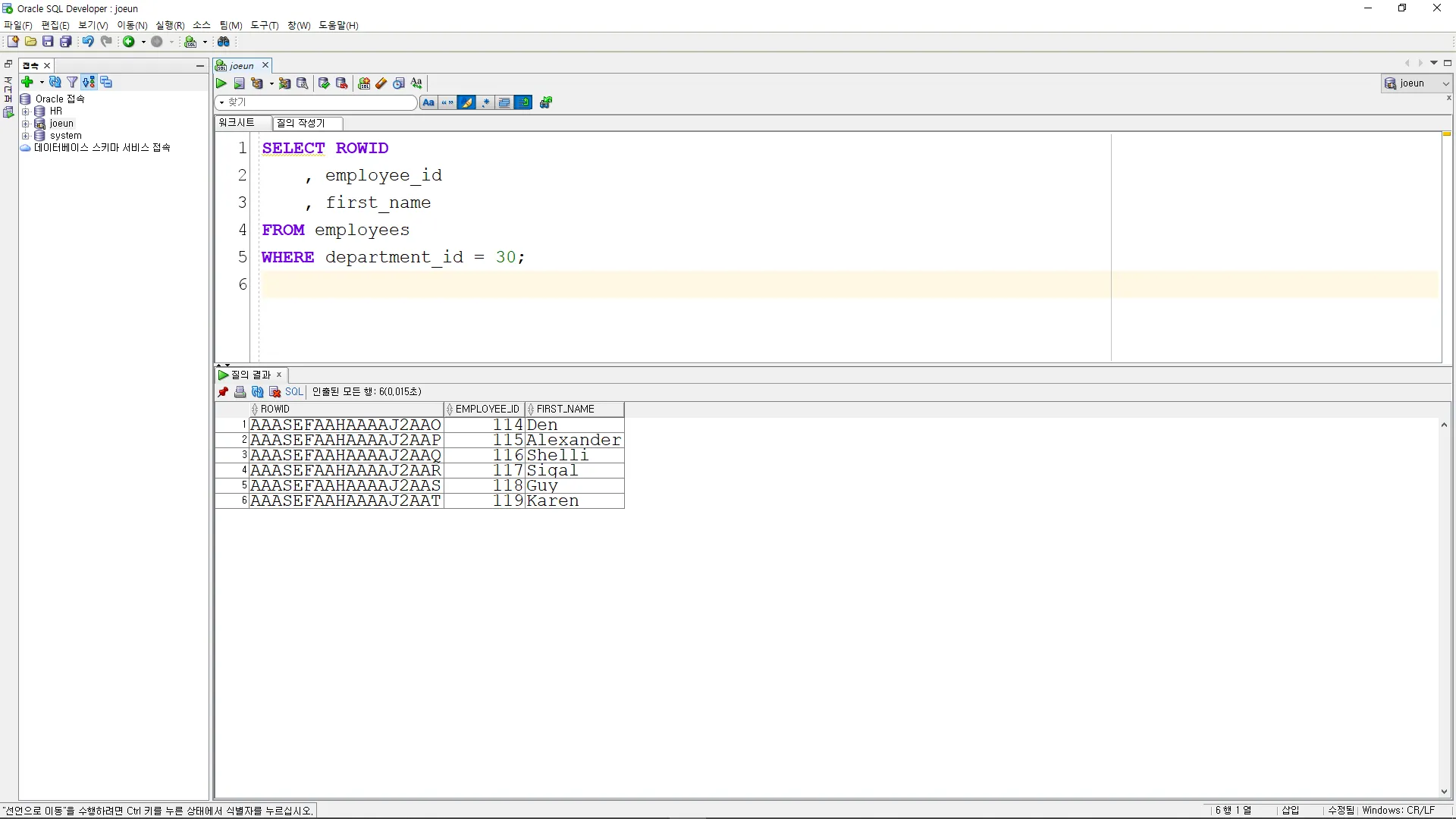
ROWID
각 행을 고유하게 식별하는데 사용되는 식별자
구성 요소 | 설명 |
오브젝트 번호 | ROWID가 속한 객체(테이블 또는 클러스터)의 고유한 번호를 나타냅니다. |
상대 파일 번호 | 행이 저장된 상대적인 데이터 파일 번호를 나타냅니다. |
블록 번호 | 행이 저장된 데이터 블록의 번호를 나타냅니다. |
데이터 번호 | 블록 내에서의 행의 상대적인 위치를 나타냅니다. |
•
ROWID 예시코드
SELECT ROWID
, employee_id
, first_name
FROM employees
WHERE department_id = 30;
SQL
복사
OFFSET
조회 결과에서 지정한 행의 개수만큼 건너뛴 후 데이터를 조회할 때 사용하는 구문이다.
Oracle 12c 이상에서 사용 가능문법
SELECT 컬럼
FROM 테이블
ORDER BY 정렬컬럼
OFFSET 행index ROWS
FETCH NEXT 가져올_행수 ROWS ONLY;
SQL
복사
OFFSET | 행 index (0~) |
FETCH NEXT | 가져올 행의 개수 |
예시
•
급여 1~10위
SELECT employee_id, last_name, salary
FROM employees
ORDER BY salary DESC
OFFSET 0 ROWS
FETCH NEXT 10 ROWS ONLY;
SQL
복사
급여가 높은 순서로 1위부터 10위까지 조회•
페이징 처리
1페이지 (페이지당 10개씩) : 1행~10행SELECT employee_id, last_name, salary
FROM employees
ORDER BY employee_id
OFFSET 0 ROWS
FETCH NEXT 10 ROWS ONLY;
SQL
복사
2페이지 (페이지당 10개씩) : 11행~20행SELECT employee_id, last_name, salary
FROM employees
ORDER BY employee_id
OFFSET 10 ROWS
FETCH NEXT 10 ROWS ONLY;
SQL
복사
PERCENT
PERCENT 키워드를 지정하면 행의 수가 아닌 퍼센트(비율)로 조회할 수 있다.
SELECT employee_id, last_name, salary
FROM employees
ORDER BY salary DESC
FETCH FIRST 10 PERCENT ROWS ONLY;
SQL
복사
급여가 상위 10%인 사원을 조회SELECT employee_id, last_name, salary
FROM employees
ORDER BY salary ASC
FETCH FIRST 10 PERCENT ROWS ONLY;
SQL
복사
급여가 하위 10%인 사원을 조회